Back to Blog
Budget-Friendly Batch Cooking: How to Stretch Ingredients Across Multiple Meals
batch cooking
budget meals
meal prep
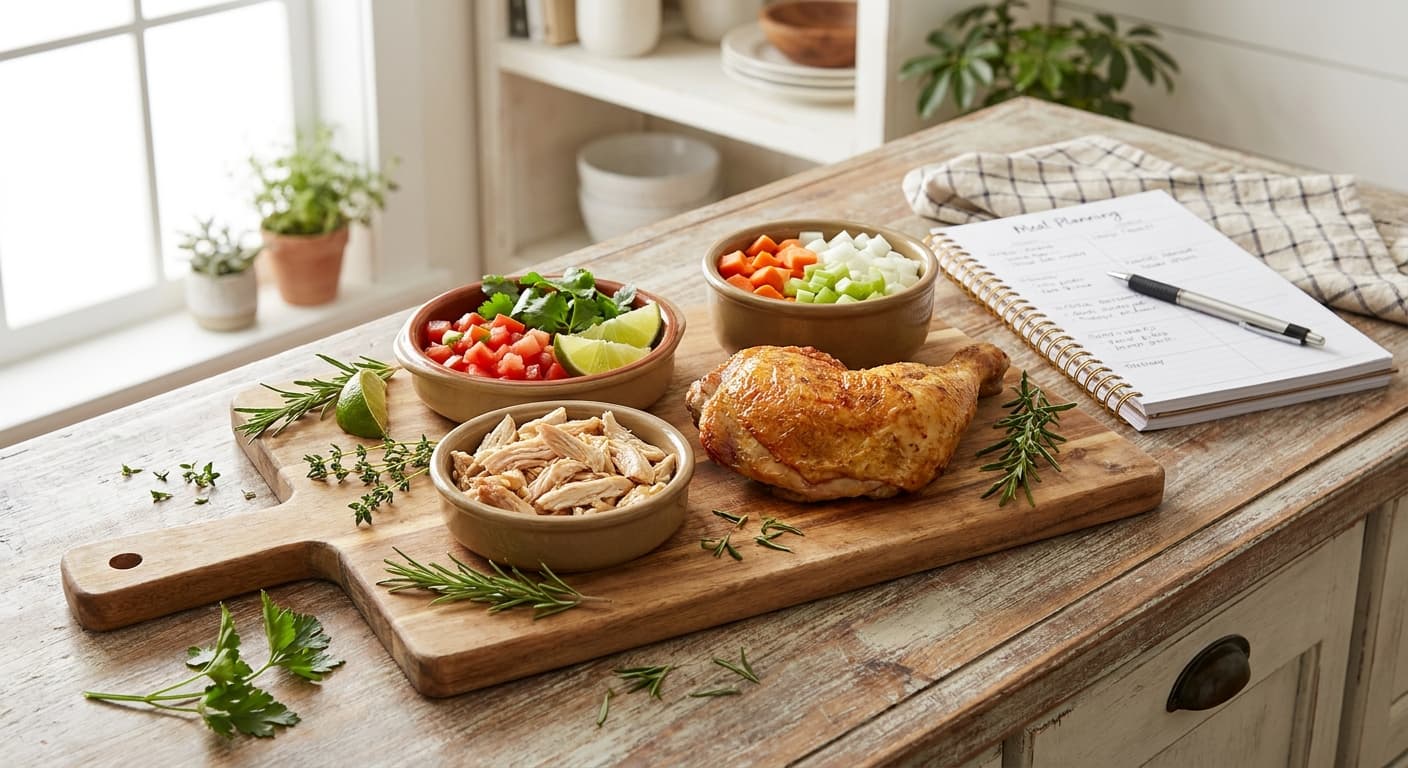
Let's be honest — the biggest frustration with budget meal planning isn't the cooking itself. It's watching half a bunch of cilantro wilt in the crisper drawer while you're already spending money on fresh ingredients for tomorrow's dinner. The real secret to eating well on a tight budget isn't just buying cheap ingredients. It's making those ingredients work overtime across multiple meals.
That's where strategic batch cooking with intentional ingredient reuse comes in. And once you get the hang of it, you'll wonder why you ever cooked any other way.
The magic formula is simple. Pick one or two base ingredients each week and plan three completely different meals around them. You're not eating the same thing three nights in a row — you're using the same building blocks in ways that feel totally distinct.
Here's what this looks like in practice:
The Chicken Thigh Foundation Buy a family pack of bone-in chicken thighs (usually $1.49–$1.99/lb). Roast the whole batch on Sunday.
You've gotten three distinct meals from one purchase, and your cost per serving drops dramatically because you're not buying separate proteins for each dinner.
Certain ingredients are worth keeping stocked at all times because they transform cheap base ingredients into completely different flavor profiles:
The key insight? These staples cost more upfront but their per-serving cost is pennies. A $3.50 bottle of soy sauce might last you 40+ stir-fry meals. That's less than nine cents per use.
This is where budget cooking gets genuinely clever. A "bridge ingredient" is something you intentionally cook extra of because it connects multiple meals.
Cook extra rice on Sunday night. Now you have:
Roast a big tray of mixed vegetables. They become:
You're not eating leftovers. You're eating planned-overs — and there's a huge psychological difference.
Here's what a realistic week looks like when you plan for ingredient overlap:
| Meal | Main Ingredient | Reused From | Cost/Serving |
|---|---|---|---|
| Mon: Roast chicken + rice | Chicken thighs | — | $2.10 |
| Tue: Chicken tacos | Shredded chicken | Monday's thighs | $1.85 |
| Wed: Chicken soup | Bones + remaining meat | Monday's thighs | $1.50 |
| Thu: Lentil dal | Dried lentils | — | $1.20 |
| Fri: Lentil tacos | Leftover dal | Thursday's lentils | $1.40 |
| Sat: Lentil soup | Remaining dal | Thursday's lentils | $1.10 |
Weekly total for 6 dinners: ~$9.15 That's under $1.52 per serving for the entire week — and you only bought two main proteins.
Stop thinking "What do I want to eat tonight?" and start thinking "What can I cook this weekend that gives me options all week?"
This doesn't mean eating sad, repetitive meals. It means being intentional. A big pot of black beans becomes Monday's burrito filling, Tuesday's black bean soup base, and Wednesday's topping for loaded sweet potatoes. Same ingredient, three completely different experiences.
The beauty of this approach is that it actually reduces decision fatigue. You're not staring into the fridge at 5 PM wondering what to make. You already know — you planned for it.
Don't try to overhaul your entire cooking routine overnight. Pick one protein and one grain this weekend. Cook extra. See how many meals you can stretch them across.
Once you see your grocery bill drop while your meal variety stays high, you'll be hooked. And honestly? The food tastes better too — there's something deeply satisfying about knowing you made the most of every single ingredient in your kitchen.
Get weekly meal planning tips delivered to your inbox.

Quick, stress‑free meal prep tricks to turn busy weeknights into effortless, tasty dinners.

Practical, actionable meal prep tips to get dinner on the table fast. From planning to batch cooking, reclaim your weeknights without the stress.

Tired of chaotic weeknights? Discover practical meal prep strategies to get dinner on the table fast without sacrificing flavor or nutrition.