Back to Blog
Your Sight-Saving Meal Plan: Prepping for Eye Surgery Recovery
Meal Prep
Recovery
Eye Surgery
Hey there, friend. If you're reading this, chances are you're getting ready for eye surgery. First things first: deep breath. You've got this. The team of medical professionals has your back, and now, let's make sure your fridge does, too.
Taking care of your nutritional needs in the days following your procedure is one of the kindest things you can do for your body. But how do you cook when you can't see well, or at all? That's where this guide comes in. We're creating a 'Recovery-Ready' kitchen, full of meals so simple, you could practically make them blindfolded. We're focusing on zero-effort prep, minimal cleanup, and maximum nutrition to support your healing.
Before we even touch a single vegetable, let's set some ground rules. Your primary goal during recovery is to rest. The secondary goal is to nourish your body with what it needs to heal. Everything else can wait.
This isn't a standard shopping trip. Think of this as gathering your healing toolkit. When you're at the store (or ordering online), stock up on these easy-to-handle, nutrient-dense staples.
Protein is essential for rebuilding tissue. Opt for pre-cooked or no-cook options.
Vitamins and minerals are your friends right now.
Fats help your body absorb vitamins and fight inflammation.
The best time to prep is the day or two before your surgery. Here’s how to do it with maximum efficiency.
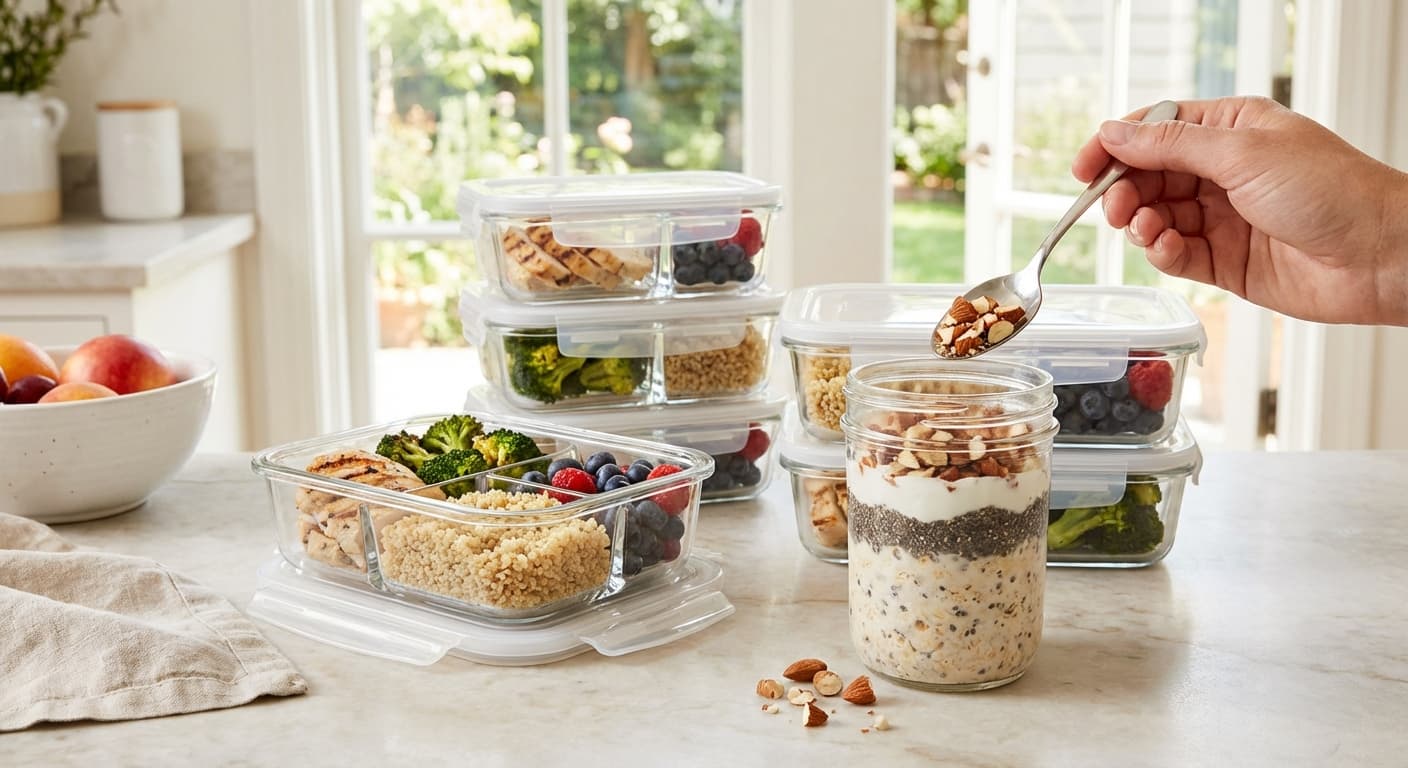
Batch Your Breakfasts: Make a big batch of something you can eat for several days. Overnight Oats are a superstar here. In a few jars, combine rolled oats, chia seeds, milk (or a milk alternative), and a scoop of protein powder or Greek yogurt. Shake and refrigerate. In the morning, just top with frozen berries and nuts. Done.
Chop & Store (The Safe Way): If you are able to do some light chopping before your surgery, be smart about it. Dice onions, bell peppers, and carrots. Store them in clearly labeled, airtight containers. Use glass if you can, so you can feel how full they are.
Cook Once, Eat All Week: Use your oven or slow cooker to your advantage.
Portion Everything: Use stackable containers to create grab-and-go meals. Divide your cooked grains (quinoa, rice), your protein, and your veggies. This way, you're not mixing and matching while you're groggy.
Sometimes, you just won't have the energy to even reheat something. For those moments, these meals are lifesavers.
You've done the hard work ahead of time. You've set yourself up for a calm, nourishing, and restful recovery. Now, your only job is to follow your doctor's instructions, listen to your body, and let your loved ones help you.
Remember, this temporary phase is all about healing. Fueling your body properly will not only make you feel better physically but will also give you peace of mind, knowing one major thing is taken care of.
You're prepared, you're supported, and you're on your way to healing. You've got this.
For more tips on making your life in the kitchen easier, explore the rest of the recipes and guides right here on MealPlanVault.com.
Get weekly meal planning tips delivered to your inbox.

Batch‑prep a Sweetgreen‑style Chicken Harvest Bowl with roasted chicken, quinoa, veggies, and dressing—store up to 5 days.

A vibrant green tuna pasta salad that’s perfect for meal‑prep containers—no reheating, just fresh, tasty lunches all week.

Batch‑cook caponata once, then reuse it all week in bowls, sandwiches, pastas, and more.