Back to Blog
The 3-Part Framework That Makes Weeknight Dinner Decisions Disappear
meal planning
weeknight dinners
meal prep
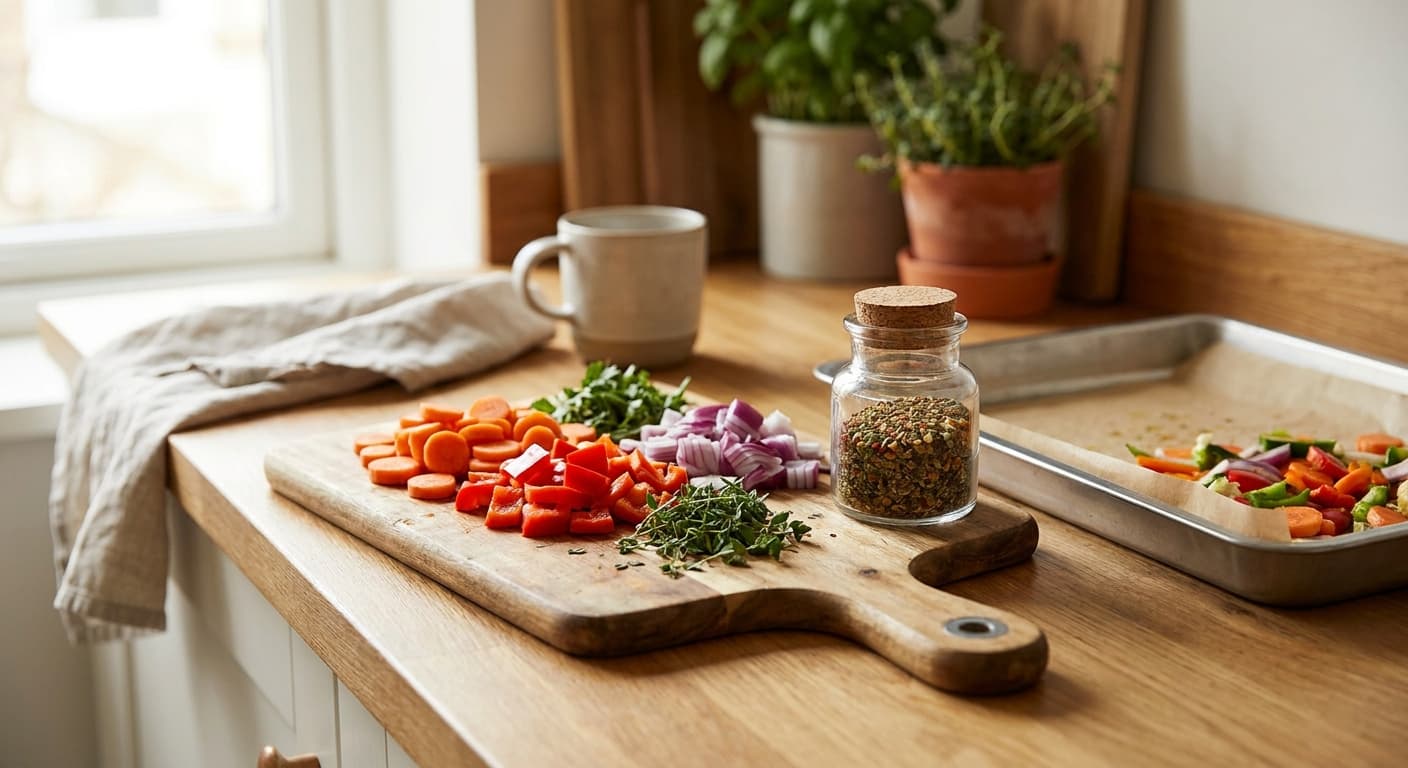
Let's be honest: by Wednesday, the question "What's for dinner?" starts to feel less like a casual inquiry and more like a psychological test. You're tired, the fridge is a mystery, and the idea of making yet another decision feels genuinely exhausting.
I've been there. And after years of helping families streamline their weeknight routines, I landed on a three-part framework that genuinely works. It's not about rigid meal plans or spending your entire Sunday batch-cooking. It's about building a decision-making system so simple that dinner practically chooses itself.
Here's how it works.
The single biggest source of weeknight dinner paralysis is having too many options. When you could theoretically make anything, you end up making nothing — and then ordering takeout at 6:45 PM.
Theme nights solve this by narrowing your universe of choices to one category per day. You're not deciding what to cook. You're deciding which version of tonight's theme to make.
Here's a rotation that covers a full week:
You can customize these to match your family's preferences. The point is that when you walk in the door at 5:30 PM, you already know the category. That alone cuts decision time in half.
Here's where most people get stuck: they think "meal prep" means spending three hours on a Sunday dicing vegetables into uniform cubes. That works for some people, but it's not sustainable for most.
Instead, I recommend what I call the 10-Minute Prep Sprint — a short, focused burst of advance work that makes the actual cooking dramatically faster.
The sprint happens the night before or that morning, and it follows a simple checklist:
That's your entire prep. Four small actions, under ten minutes, and when dinner time arrives, you're not starting from zero. You're starting from 60% done.
The magic is in the consistency, not the volume. Doing this every single evening compounds into a massive time savings over the week.
Even with theme nights, you'll eventually think, "I've made every taco variation I know." That's where a simple rotation system saves you.
Create a master list for each theme night. Write down 8–10 recipes you already know and love under each category. Keep it on your phone or taped inside a cabinet door.
Then, use a basic rule: never repeat a specific recipe within a three-week window. With 8–10 options per theme and only one theme per week, that gives you nearly three months of variety before you cycle back to the same exact dish.
When you discover a new recipe that works, add it to the list. When one falls flat, cross it off. The list evolves with you.
A few tips to keep the rotation fresh:
Here's what this looks like in practice on a random Wednesday:
You walk in the door. It's Sheet Pan Night — you already know that. Last night during your 10-minute sprint, you tossed chicken thighs in a jar of pre-mixed herbs and set broccoli florets in a container. You preheat the oven, spread everything on a pan with olive oil, and slide it in. Twenty-five minutes later, dinner is done. You spent maybe eight minutes of active time.
No Googling. No staring into the fridge. No guilt about another night of cereal.
Yes, this framework saves time. But the deeper win is the mental relief. When dinner decisions are systematized, you reclaim that cognitive energy for things that actually matter — helping with homework, calling a friend, or just sitting down without a to-do list running in your head.
Start small. Pick three theme nights this week. Do one 10-minute prep sprint. Write down five recipes you already know under each theme.
You don't need to overhaul your entire kitchen. You just need a system that makes the next decision easier than the last one.
Get weekly meal planning tips delivered to your inbox.

Quick, stress‑free meal prep tricks to turn busy weeknights into effortless, tasty dinners.

Practical, actionable meal prep tips to get dinner on the table fast. From planning to batch cooking, reclaim your weeknights without the stress.

Tired of chaotic weeknights? Discover practical meal prep strategies to get dinner on the table fast without sacrificing flavor or nutrition.