Back to Blog
The Weekly Operating System: Meal Prep for Families Who Are Already Overwhelmed
meal prep
family meals
busy parents
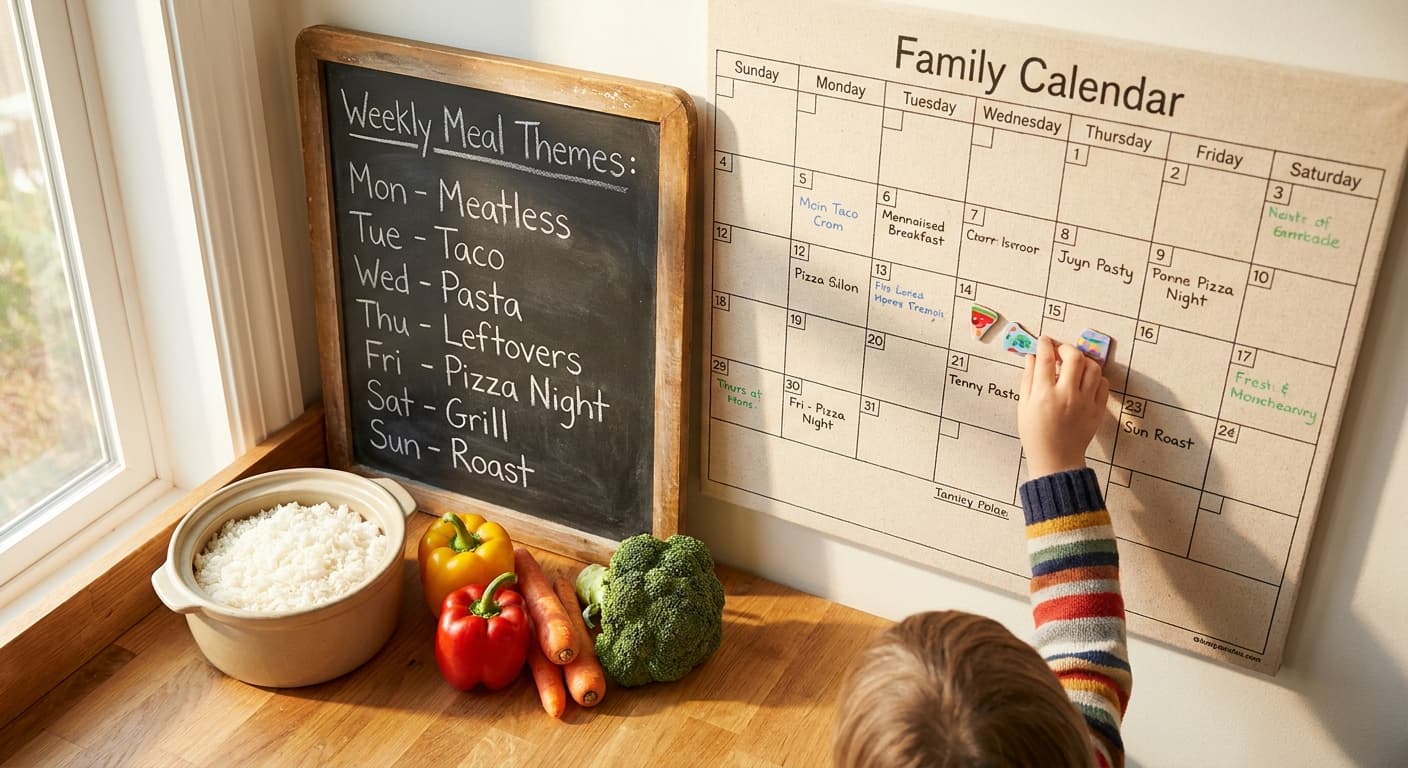
If you've ever stood in front of the fridge at 5:47 p.m. with three hungry kids and zero ideas, you already know the problem. Meal prep advice usually assumes you have a free Sunday, a tidy kitchen, and the energy to portion out 25 glass containers. That's not most of us.
What if meal prep wasn't about cooking everything in advance, but about building a small set of habits that make weeknight decisions easier? Think of it as a weekly operating system: a few simple rules, a shared family calendar, and a 'good enough' mindset that keeps you moving forward.
Decision fatigue is the real enemy. When you're tired, even choosing between chicken or pasta can feel impossible. A decision framework removes that friction.
Try this: pick a loose theme for each night of the week. For example, Monday is pasta, Tuesday is tacos or bowls, Wednesday is sheet pan, Thursday is leftovers or 'snack dinner,' Friday is pizza or takeout. The themes don't have to be rigid—if Wednesday's sheet pan meal gets bumped to Thursday, that's fine. The point is that when someone asks 'what's for dinner?' you already have a category to start from.
Write your theme plan on a sticky note or in a shared notes app. Keep it visible. The goal is to shrink the number of decisions you have to make in the moment.
In many households, one person carries the entire mental load of meal planning. That's a recipe for burnout. Instead, treat meal prep like a small family project with clear roles.
Rotate roles weekly if possible. Even young kids can be in charge of setting the table or picking a vegetable. When everyone knows their job, the system runs with less friction.
You don't need to prep every ingredient for every meal. Instead, ask yourself: what is the smallest amount of prep that would make tomorrow's dinner feel manageable?
That might be:
This 'minimum viable prep' approach respects your energy levels. Some weeks you'll do more; other weeks, boiling eggs is the win. Both count.
Keep a short list of 8 to 10 meals your family actually eats without complaint. Store them in a shared note or a magnet on the fridge. When the planner role kicks in, they can pick from this bank instead of scrolling recipes for an hour.
Rotate two or three new recipes in each month so the bank stays fresh, but don't let novelty become a burden. Familiarity is a feature, not a failure.
A quick Sunday reset can anchor your week. Spend ten minutes checking what's already in the fridge, noting any nights you'll be late or have activities, and assigning who's cooking when.
Put those meals on a shared calendar—digital or paper. When the plan is visible, you're less likely to default to cereal for dinner three nights in a row. (Though cereal for dinner is also a valid backup plan. No guilt.)
The system exists to serve you, not the other way around. If the week goes sideways, lean on your meal bank, call on your roles, and remember: feeding your family is the goal, not perfection.
Meal prep as a weekly operating system isn't about picture-perfect containers. It's about reducing chaos, sharing the load, and making sure everyone gets fed with a little less stress.
Get weekly meal planning tips delivered to your inbox.

Quick, stress‑free meal prep tricks to turn busy weeknights into effortless, tasty dinners.

Practical, actionable meal prep tips to get dinner on the table fast. From planning to batch cooking, reclaim your weeknights without the stress.

Tired of chaotic weeknights? Discover practical meal prep strategies to get dinner on the table fast without sacrificing flavor or nutrition.